

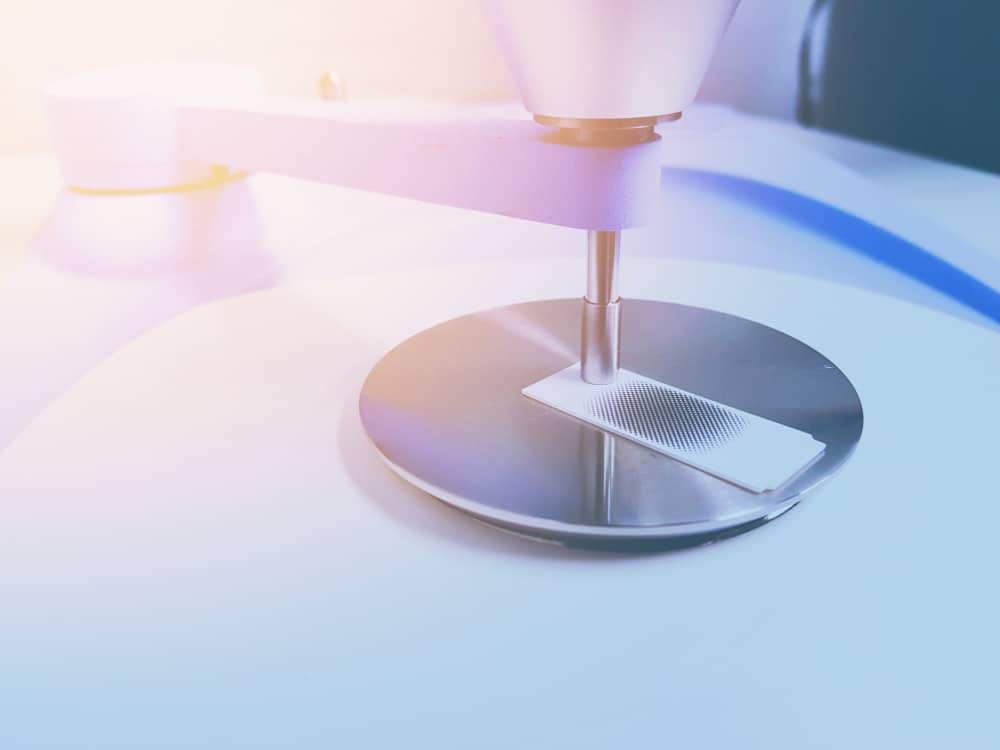
FTIR spectroscopy has become a crucial tool in the analytical chemistry landscape, offering valuable insights into the composition and characteristics of various materials. Whether in research labs, quality control settings, or environmental studies, FTIR instruments are widely used to identify organic, polymeric, and, in some cases, inorganic materials.
For anyone curious about how this technology works and where it fits into the modern scientific world, here’s a general guide to understanding Agilent FTIR spectroscopy instruments.
Contents
What is FTIR Spectroscopy?
FTIR stands for Fourier Transform Infrared spectroscopy. It is a technique used to obtain an infrared spectrum of absorption or emission of a solid, liquid, or gas. By passing infrared light through a sample and measuring how much of that light is absorbed at various wavelengths, FTIR instruments can provide a detailed molecular fingerprint of the material.
The resulting spectra represent the molecular vibrations of the sample, giving information about chemical bonds, functional groups, and molecular structure. FTIR is non-destructive and requires minimal sample preparation, which makes it popular in various applications.
How FTIR Instruments Work
The core of an FTIR system is the interferometer, typically a Michelson interferometer. Instead of measuring absorption at one wavelength at a time (as in dispersive IR spectroscopy), FTIR instruments collect data across all wavelengths simultaneously. This is made possible through a mathematical process known as the Fourier transformation, which converts raw interferogram data into an interpretable IR spectrum.
Most FTIR systems include:
- A source of infrared radiation
- A sample compartment or accessory
- An interferometer
- A detector
- Software for data acquisition and interpretation
This design enables quick and accurate measurements, making FTIR a practical choice for many types of analysis.
Key Applications of FTIR Spectroscopy
FTIR spectroscopy is used in a wide range of industries and scientific disciplines. Here are some common applications:
Pharmaceutical Industry
FTIR plays a key role in drug development and quality control. It helps verify the identity and purity of raw materials, intermediates, and final products. It also assists in detecting counterfeit drugs and studying drug-excipient compatibility.
Polymer and Plastic Analysis
This technique is used to characterize polymers, investigate polymer blends, and assess additives or contaminants. It helps in both the manufacturing process and failure analysis of materials.
Environmental Monitoring
FTIR can identify air pollutants, measure greenhouse gases, and analyze soil or water contaminants. Its non-destructive nature makes it ideal for continuous monitoring systems.
Food and Agriculture
FTIR is widely used in the food industry to assess quality, detect adulteration, and measure moisture or fat content. It also supports agricultural research by analyzing plant and soil samples.
Forensic and Criminal Investigation
FTIR contributes to forensic science by analyzing unknown substances found at crime scenes, including drugs, fibers, paints, and explosives.
Academic and Industrial Research
From materials science to biochemistry, FTIR spectroscopy serves as a fundamental tool in understanding molecular interactions and structural properties.
Types of FTIR Spectroscopy Instruments
FTIR instruments are available in several configurations, depending on user needs and applications:
Benchtop Systems
These full-sized instruments offer advanced performance and a broad range of capabilities. They are suited for high-throughput labs requiring detailed and precise results.
Portable FTIR Systems
Compact and rugged, these systems are ideal for fieldwork or on-site inspections. They offer real-time results with minimal sample prep, commonly used in environmental or forensic applications.
Microscope-Integrated FTIR
These systems combine infrared spectroscopy with microscopy, enabling analysis of small or heterogeneous samples. They are useful in failure analysis, micro-contaminant detection, and advanced materials research.
Advantages of Using FTIR Instruments
FTIR spectroscopy is preferred for many reasons:
- Non-destructive: Samples remain intact after analysis
- Fast and efficient: Complete spectra are captured in seconds.
- Minimal sample prep: Reduces time and potential for error
- Versatile: Works with solids, liquids, and gases
- Quantitative and qualitative: Provides both structural identification and concentration data.
- Broad spectral range: Suitable for analyzing a wide array of compounds
Challenges and Considerations
While FTIR offers many advantages, it’s not without limitations. Strong water absorption can interfere with spectra, making sample drying important in some cases. Also, very similar compounds may produce overlapping peaks, requiring complementary techniques or advanced software for precise identification.
Sample handling techniques such as Attenuated Total Reflectance (ATR), transmission cells, or diffuse reflectance accessories can help overcome many of these challenges. Selecting the right configuration is essential for accurate and efficient analysis.
Evolving Trends in FTIR Spectroscopy
Recent developments are making FTIR spectroscopy even more accessible and versatile. Miniaturized devices, improved software algorithms, and automated workflows are helping users conduct advanced analyses with greater speed and accuracy. Enhanced detectors and optics are improving sensitivity and resolution, expanding the scope of potential applications.
As industries increasingly rely on data-driven decisions and quality control, FTIR spectroscopy continues to evolve as a foundational technology in analytical labs worldwide.
Conclusion
FTIR spectroscopy is a powerful analytical tool with wide-ranging applications in science and industry. Its ability to quickly and accurately analyze a variety of materials makes it indispensable for researchers, engineers, and quality assurance professionals. Whether you’re assessing a pharmaceutical compound, monitoring pollutants, or analyzing a new polymer blend, FTIR instruments offer clarity and confidence in molecular analysis.