

Most healthcare organizations don’t run into financial trouble overnight. It usually happens gradually — a few denials that never got appealed, claims waiting on small corrections, or rising A/R caused by documentation gaps. Over time, these quiet issues weaken a practice’s financial stability.
Recent Google Trends spikes around billing modifiers, POS codes, and payer rules show how much confusion exists in the field. When billing expectations tighten, revenue cycles become more vulnerable — and strong systems become essential.
Contents
Why Revenue Cycle Management Is More Important Now
Billing has always required precision, but payer rules now change faster than most clinics can track. A small coding error or eligibility mismatch can delay reimbursement for weeks. RCM matters because it connects every financial step — from appointment scheduling to final payment — into one clean workflow.
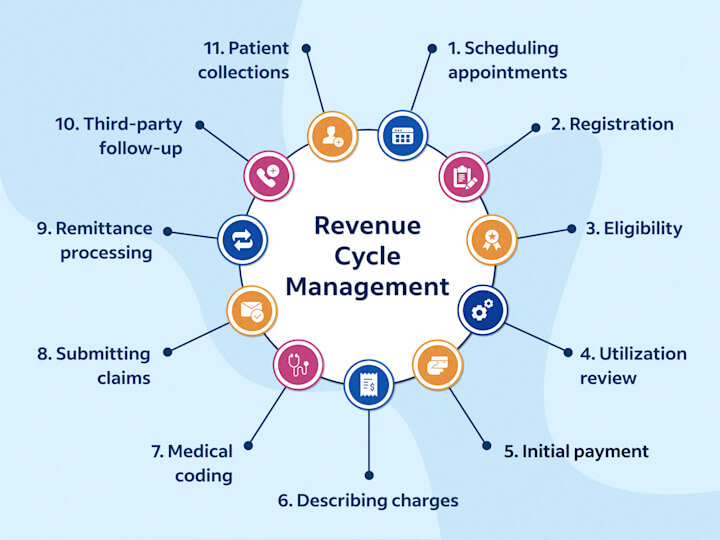
What Revenue Cycle Management Actually Includes
A healthy revenue cycle touches every administrative and financial step tied to patient care, including:
• Insurance eligibility checks
• Accurate charge capture
• Proper coding
• Clean claim submission
• Denial prevention and correction
• A/R follow-up
• Payment posting
• Reporting and analytics
Where Practices Lose Revenue Without Realizing It
1. Eligibility errors — small mistakes at check‑in become denial triggers.
2. Coding confusion — spikes in POS and modifier searches show rising uncertainty.
3. Documentation gaps — payers often delay claims for missing details.
4. Weak denial management — older claims get ignored.
5. Slow follow‑ups — even clean claims get stuck without consistent tracking.
How RCM Services Improve Profitability
When experienced RCM teams oversee the workflow, practices typically see improvements in:
• Claim accuracy
• Coding quality
• A/R recovery
• Staff efficiency
• Financial visibility
As payer requirements become stricter and denial reasons grow more complex, many clinics turn to professional revenue cycle management services to bring structure, reduce errors, and stabilize financial performance. The right support helps prevent small administrative issues from snowballing into long‑term revenue losses.
Why Outsourcing Fits Today’s Market Challenges
Staffing shortages continue to affect billing teams across the U.S. Hiring experienced billers is difficult and expensive, and turnover disrupts the entire revenue cycle. That’s why many practices now rely on external expertise — they need consistent financial performance even when internal staffing is unstable.
A detailed look at this shift can be found in Surviving RCM Staff Shortages: Why Outsourcing Is the Smartest Move for 2026, which explains how staffing gaps increase denials, slow payments, and hurt financial performance — and why outsourcing has become a dependable solution for 2026 and beyond.
Final Thoughts
Profitability isn’t just about patient volume. It depends on how effectively a practice manages its revenue cycle. When the RCM process runs smoothly, claims move faster, denials decrease, and clinics gain financial stability.
A well‑managed revenue cycle quietly supports everything — allowing providers to focus more on patient care and less on administrative complexities.


