

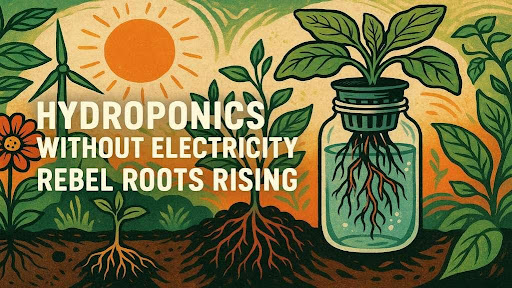
Growing plants without electricity may sound radical—but perhaps that’s exactly what we need. In a world wired to the brink of burnout, unplugging from artificial systems is no longer a whimsical dream. It’s a quiet revolution. Hydroponics without electricity isn’t just about gardening. It’s about reclaiming harmony with the rhythms of the earth, without asking permission from the grid.
For too long, hydroponics relied on an endless tangle of cords, pumps, and blinking lights. But sustainability doesn’t start with switching to solar panels—it begins when we stop assuming technology is the only answer. Now, a new movement is emerging, one that leans into stillness, simplicity, and solidarity with the more-than-human world. Some online voices have been whispering about this change—one of them, a certain green-focused platform that rhymes with Hydroponics360, quietly shares tools for this peaceful resistance. But the movement is bigger than any brand. This is the work of those who choose to listen to the soil, even when there is no soil at all.
Contents
Cut the Power, Trust the Pulse

To grow without electricity is to grow with intention. It’s not laziness—it’s a form of discipline. A kind of soft defiance. You’re not rejecting productivity but redefining it. Here, gravity becomes your engineer, the sun your lamp, and your care the automation.
The system is humble, but its roots run deep. No circuits, no switches—just natural balance. Just the pulse of life, uninterrupted.
The Sun Was Always Enough
Without electricity, grow lights go dark. But the sun—faithful, fierce, and free—keeps shining. You just have to meet it where it is.
South-facing windows, sunrise-kissed balconies, and rooftops untouched by cables become the new grow spaces. It’s not about control anymore. It’s about alignment. Letting light in, not manufacturing it.
Growing with sunlight is more than a technique—it’s a worldview. A return to solar time. To rising with the day and resting with the dusk. To being part of the rhythm, not the disruption.
Kratky Method: Let Still Water Speak
If hydroponics had an anarchist cousin, it would be the Kratky method. There are no pumps, no timers, no hum of machines—only a container of water, a splash of nutrients, and a plant learning to stretch downward. As the water level drops, roots breathe deeper. The plant grows. No intervention, no urgency.
Kratky doesn’t just grow food. It grows patience. It teaches surrender. And it shows us that sometimes the best thing we can do is… absolutely nothing.
Wicking: The Thread That Binds
There’s something almost maternal about the wicking method. A soft strip of cloth, dipped into nutrient solution, quietly feeds the plant above. It doesn’t rush. It doesn’t flood. It simply offers, and the plant receives.
This method thrives in small spaces, on windowsills, balconies, or corners that capitalism forgot. It proves that even the gentlest systems can nourish fiercely.
Let Gravity Work

In this unplugged paradigm, gravity isn’t your opponent—it’s your collaborator. Want to drip water into your plant’s roots? Elevate the reservoir. Use tubes. Use valves. Let nature pour the drink.
You don’t need machinery to flow. You just need slope, patience, and trust in the laws of physics. Simplicity isn’t a compromise—it’s liberation.
The Revolution Will Be Repurposed
Forget sleek, sterile kits. This is not about product. It’s about process. Here, empty bottles become reservoirs. Discarded containers become cradles for green life. The tools of consumption get rewritten into symbols of regeneration.
What matters isn’t how shiny your setup looks—it’s whether it honors the cycle. In a world choking on waste, growing food in an upcycled yogurt tub is a love letter to the planet.
Grow What Grows with You
Not every plant will thrive in this unplugged world—and that’s okay. You’re not aiming for domination. You’re cultivating coexistence.
Leafy greens like lettuce, spinach, basil, and mint—these are your allies. They don’t demand much. They ask for light, water, and a bit of calm. Tomatoes and cucumbers may still join the cause if you offer them enough patience and sun. But if they don’t? Let them go.
Resilience means knowing what to release.
Your Hands Are the New Sensor
Without gadgets and apps, you’re left with only your senses—and that’s a gift. You’ll notice when the water’s low. You’ll sense when the plant is thirsty. You’ll read the yellowing of a leaf like a poem.
Hydroponics without electricity doesn’t disconnect you. It reconnects you. To your plants. To your intuition.
The Quiet Rebellion of Roots
This isn’t about growing produce. It’s about growing presence. When you embrace hydroponics without electricity, you step out of the loop of consumption and into a cycle of regeneration.
You say no—not to technology, but to dependency. You say yes—to agency, to care, to the radiant slowness of plants learning how to grow, even in containers, even without wires, even when everything around them moves too fast.
This is a call to root deeper, live lighter, and remember that everything we need is already within reach. All we have to do is slow down, unplug, and listen.
FAQs
What if there’s not enough light?
Then let the plant rest. Nature doesn’t bloom every day. Neither should you.
How often should I refill water?
Let your fingers tell you. Touch the wick. Watch the leaves. There is no app for awareness.
Can I use plastic bottles?
Yes—if they’re clean and safe. Every reuse is resistance. Every bottle saved is one less wound.
Why won’t my tomato grow?
Maybe it’s asking for more than you can give right now. And that’s okay. Grow what grows with ease.
Can this work in winter?
If the sun visits your window, yes. If not, let the garden sleep. It will wake again.