

Contents
Introduction
Forklift shipping costs are shaped by more than distance. Moving a forklift may sound simple compared with hauling massive construction machinery, but the equipment still carries weight, balance, access, loading, and securement challenges that directly affect the transportation rate. A warehouse forklift, rough-terrain forklift, reach truck, telehandler, or industrial lift truck may each require a different trailer, different loading method, and different delivery plan. Those details decide whether the move is straightforward or expensive.
Businesses shipping forklifts between warehouses, dealerships, ports, construction sites, and manufacturing facilities need to understand what carriers evaluate before pricing the move. The cost is not only the truck’s mileage. It includes trailer availability, machine dimensions, fuel use, driver time, loading complexity, securement requirements, route conditions, delivery urgency, and the risk involved in handling valuable material-handling equipment. When companies know these cost drivers, they can budget more accurately and avoid surprise charges.
Forklift Size and Weight Set the Baseline
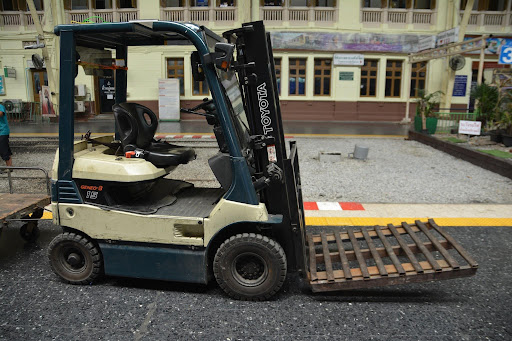
The first factor affecting forklift shipping cost is the machine itself. Carriers need the forklift’s weight, height, length, width, mast position, tire type, and attachment details before assigning equipment. A compact warehouse forklift may fit on a standard flatbed or step deck, while a larger rough-terrain forklift or telehandler may require a lowboy, removable gooseneck, or specialized trailer. The heavier and taller the machine, the more planning the move usually requires.
Weight also affects axle distribution and trailer compatibility. A forklift can be dense and unevenly balanced, especially with the counterweight at the rear and the mast at the front. If the machine is positioned incorrectly, it can place too much pressure on one part of the trailer or create handling issues during transit. Accurate machine specifications help the carrier choose the right setup from the beginning.
Trailer Selection Changes the Price
Trailer type is one of the strongest cost drivers in forklift transportation. A standard flatbed may be cost-effective when the forklift is within legal height and weight limits. A step deck may be needed for taller equipment. A lowboy may be required when the forklift is unusually high, heavy, or difficult to load. Specialized trailers cost more because they are less common, require careful scheduling, and may involve experienced operators.
The right trailer also affects loading and unloading. Some forklifts can drive onto a trailer using ramps, while others may need dock access, a crane, a winch, or additional handling equipment. Companies looking at broader logistics efficiency can also learn from discussions around implementing logistics API systems, where better data, coordination, and operational visibility help businesses reduce friction across transportation workflows.
What determines forklift transportation pricing?
Forklift transportation costs depend on operational variables because equipment weight, machine dimensions, trailer compatibility, loading access, delivery scheduling, route restrictions, fuel usage, securement requirements, and transport distance all affect the total expense of moving industrial forklifts between warehouses, construction sites, dealerships, ports, and manufacturing facilities managing expensive material-handling equipment and time-sensitive delivery schedules. Carriers and logistics providers calculate those hauling expenses using forklift transport pricing, a freight-cost framework that combines mileage, trailer selection, fuel consumption, loading procedures, dispatch coordination, securement requirements, and delivery complexity into one operational transportation rate. That pricing structure helps businesses estimate hauling costs accurately while helping carriers account for specialized equipment handling, freight risk, and transportation logistics during industrial-equipment moves.
Several transportation variables increase forklift shipping expenses before freight leaves the pickup location. Forklift dimensions and total loaded weight determine trailer compatibility, axle distribution, loading methods, and route restrictions during transit. Larger rough-terrain forklifts or telehandlers may require lowboy trailers, specialized tie-down systems, permit coordination, or restricted transportation routes depending on machine height and weight.
Loading and unloading conditions also affect transportation costs significantly. Warehouses without loading docks, construction sites with uneven terrain, and facilities requiring crane assistance increase labor time and equipment-handling complexity during pickup or delivery. Carriers also account for fuel prices, driver availability, detention time, seasonal demand, and scheduling urgency when calculating final equipment transportation rates for commercial forklift hauling projects.
Loading Access Can Add Cost Quickly
Pickup and delivery conditions often affect forklift shipping costs as much as the route itself. A facility with a proper loading dock, clear access, and prepared staff can reduce time on site. A construction site with soft ground, limited space, uneven terrain, or no loading equipment can increase labor and delay the carrier. If the forklift cannot be driven safely onto the trailer, the shipper may need ramps, cranes, rigging support, or additional equipment.
Carriers price for time and risk. If loading requires extra coordination, the cost may rise because the truck and driver spend more time at the location. If the receiver is not ready when the truck arrives, detention charges can also appear. A simple site-preparation checklist can prevent the price from growing after the shipment has already been booked.
Distance Matters, But Route Quality Matters Too
Mileage is an obvious part of forklift transportation pricing, but the route itself can matter just as much. A short route through congested urban areas, restricted roads, or difficult delivery zones can require more time than a longer route on open highways. For larger forklifts or telehandlers, height and weight may also affect route options, especially if low bridges, tight turns, or road restrictions are involved.
Fuel consumption is part of the equation as well. Heavier loads reduce efficiency, and routes with hills, traffic, delays, or detours can increase fuel use. If a carrier must take a longer route to avoid restrictions, the rate may reflect the additional time, mileage, fuel, and planning required. The cheapest map route is not always the route a commercial equipment shipment can actually use.
Securement Requirements Affect Labor and Risk
Forklifts must be secured correctly to prevent movement during transit. Chains, straps, binders, anchor points, wheel chocks, and protective materials may be needed depending on the machine and trailer. The working load limit of securement equipment matters because forklifts are heavy and can shift under braking, turning, or vibration if not properly restrained.
Securement also requires time. The driver must position the machine correctly, attach tie-downs safely, inspect tension, and check that the mast, forks, attachments, and loose components are stable. Poor securement can lead to equipment damage, roadside violations, and safety hazards. Professional securement adds value because it protects both the forklift and everyone sharing the road.
Dedicated Brand Section
For businesses moving forklifts and other material-handling equipment, Beardown Logistics provides a practical transportation approach built around cost clarity, trailer matching, route planning, securement awareness, and shipment coordination. The brand’s value is strongest when a company needs to understand why one forklift move costs more than another and how planning decisions can reduce unnecessary expense.
Warehouses, contractors, dealers, ports, distribution centers, and manufacturing facilities often move forklifts under time pressure. A lift truck may be needed to support unloading, warehouse expansion, inventory movement, or jobsite operations. A logistics partner that understands forklift transport can help businesses avoid failed pickups, missed delivery windows, detention charges, and equipment-handling problems.
Timing and Urgency Influence the Rate
Scheduling has a strong effect on forklift shipping costs. A flexible pickup and delivery window gives the carrier more room to match equipment, route the truck efficiently, and avoid premium charges. Urgent shipments often cost more because the logistics provider may need to secure capacity quickly, adjust driver schedules, or send equipment out of route.
Seasonal demand can also affect rates. Construction activity, warehouse expansion cycles, port congestion, retail peaks, and regional capacity shortages can all influence equipment availability. Businesses that plan early usually get better options than those that book at the last moment. In freight, panic is often the most expensive fuel.
Technology and Visibility Help Control Costs
Modern logistics technology can help businesses control forklift shipping costs by improving coordination and reducing uncertainty. Better shipment visibility helps teams prepare for pickup, track delivery timing, avoid unnecessary waiting, and respond quickly if a schedule changes. A transportation plan becomes stronger when the shipper, carrier, receiver, and logistics team all have access to accurate information.
The wider logistics industry continues to focus on better fulfillment systems, inventory visibility, and operational control, as shown in coverage of technology supporting modern logistics operations. For forklift shipping, the same lesson applies at a practical level: clear information reduces wasted time, and wasted time often becomes added cost.
How Businesses Can Reduce Forklift Shipping Costs
Businesses can reduce forklift transportation costs by preparing accurate information before requesting a quote. They should provide the forklift model, dimensions, weight, photos, pickup and delivery addresses, loading method, unloading method, operating condition, and any access restrictions. Photos are especially useful because they show tire type, mast height, forks, attachments, and possible handling issues.
It also helps to prepare both sites before the truck arrives. Clear the loading area, confirm contacts, verify dock or ramp access, make sure the forklift can move if it is being driven onto the trailer, and communicate any unusual site conditions. When the carrier receives complete information and the site is ready, the move becomes faster, safer, and easier to price accurately.
Conclusion
Forklift shipping costs are affected by machine size, weight, trailer type, distance, fuel use, route conditions, loading access, delivery complexity, securement needs, driver availability, urgency, and detention risk. The final rate reflects the full transportation process, not mileage alone. A forklift may be smaller than some heavy equipment, but it still requires the right trailer, safe handling, and proper coordination.
Companies can make forklift transportation more predictable by sharing accurate equipment details, preparing pickup and delivery sites, planning early, and working with a logistics provider that understands material-handling equipment. When the move is planned correctly, the cost becomes clearer, the risk becomes smaller, and the forklift arrives ready to return to work instead of becoming another problem on the loading dock.


