

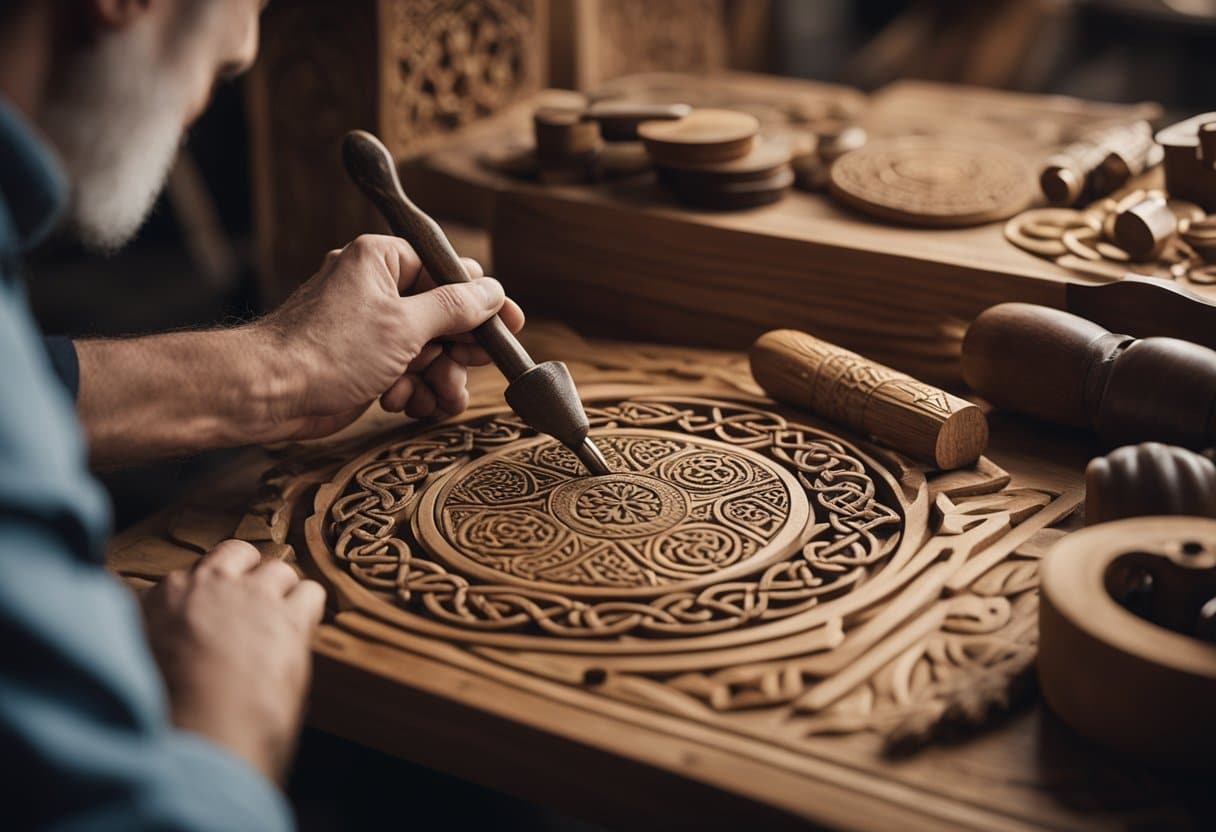
In an age shaped by digital acceleration and rapidly shifting cultural trends, traditional craft often appears to belong to another era. Yet handmade objects, especially those rooted in Celtic and Scottish heritage, continue to carry meaning that goes far beyond ornamentation. They reflect centuries of symbolic language, skilled labour, and the stories of communities who shaped their history through art.
Contents
The Deep Time of Celtic Symbolism
Celtic design is among the oldest artistic traditions in Europe. The interlaced patterns found on carved stones, illuminated manuscripts, metalwork, and early Christian artefacts represent ideas of continuity, protection, interconnection, and the cyclical nature of life. These motifs were never merely decorative. They communicated beliefs, origins, and collective memory.
Even clan crests, which gained prominence in medieval Scotland, were built from symbolic systems that long predate heraldry. Each element—an animal, a hand, a plant, a mythical figure—reflected a story or lineage that connected families to their land and identity.
Craftsmanship as a Form of Cultural Preservation
The survival of these motifs into the modern era is not accidental. It depends on artisans who treat the traditional designs not as nostalgic images, but as cultural archives requiring care and accuracy. Some continue to study historical manuscripts, wax patterns, and heraldic registries to understand how these symbols should be rendered.
The commitment to this work illustrates how craft becomes a form of preservation. When handled with historical sensitivity, Celtic and Scottish motifs remain authentic—even as the world around them changes.
Among the workshops that contribute to this continuity are the craft traditions preserved by Celtic Studio, where long-established designs are approached with respect for their documented origins. This kind of archival craftsmanship keeps historical motifs from drifting into generic forms or losing their cultural meaning.
Why People Still Seek Ancestral Symbols
Across the global Scottish diaspora, ancestral symbols remain deeply significant. Families who may be generations removed from Scotland still feel a connection to the crests, patterns, and motifs that defined their earlier kin. For many, these objects are tangible reminders of lineage—markers of identity that survive migration, time, and distance.
Even for those without direct Scottish ancestry, the appeal of Celtic design lies in its universality. The knotwork that has no beginning or end can represent unity; the stag can suggest strength; the intertwined spirals can reflect growth and renewal.
These themes resonate far beyond geography.
Heritage Craft in the Modern World
In today’s fast-paced environment, handmade work offers something increasingly rare: permanence. Traditional craft is slow, intentional, and rooted in skill that cannot be automated. It resists the disposability of contemporary consumer culture.
When heritage-based craft thrives, it signals that culture is not simply inherited—it is actively maintained. Each carefully reproduced crest, each hand-carved motif, becomes part of a cultural conversation that refuses to disappear.
A Cultural Legacy Worth Keeping
Traditional Celtic craft offers more than aesthetic pleasure. It represents the continuity of human expression across centuries. It shows how symbols migrate from stone to manuscript to metal, and how meaning carries forward through the hands of those who choose to honour the past.
In this sense, heritage craft is not a relic of a vanished world. It is a living practice, shaped by those who believe that the stories of previous generations deserve to survive in our own.